Northeastern Indiana farmer works to give back to the life that he loves
By Dave Blower Jr.
Brian Warpup, a farmer from Warren, Ind., loves Mondays.
He is the fourth generation to work his family’s farm in rural Huntington County. Warpup and his wife, Nicole, have raised a son and two daughters on the farm. He is a board member of the Indiana Soybean Alliance (ISA), the state’s soybean checkoff program, and for the past year he has served as the chair of ISA’s Membership and Policy Committee. But as much as anything, Warpup enjoys working his fields and the process of producing a crop.
Sometimes, that can irritate his family.
“This was a few years ago as we were returning from a family vacation in Florida. We landed at the airport in Indianapolis, and we were starting to drive home,” said Warpup, setting the scene. “My wife is a schoolteacher, and she had to go back to work on Monday, and the kids had to go back to school. They were just dreading it. But I’m sitting there kind of smiling, and my wife says, ‘You’re the only person I know excited to get back to work on Monday morning.’ What can I say? Monday mornings are my joy! I know that kind of sounds strange, but when you love what you’re doing, it’s not work.”
In full disclosure, Warpup hasn’t always felt that way. When he left for college at Ball State University in the early 1990s, the plan didn’t include farm work. Now, he admits he was a little immature at that time.
“I grew up just like any farm kid. I worked for my dad and my grandpa and all my relatives,” Warpup explained. “We all did the weekend work and the evening work, and I did not want that as my life. I went to college, graduated, got a job in Indianapolis with a publishing company and soon realized that the publishing world wasn’t all that it was cracked up to be. So, within five years, there were a couple opportunities from retiring neighbors that would allow me to come back to the farm. It would allow the farm to get a little bit bigger and sustain a couple more people, family, on the farm. That’s when I came back, and it was the best decision I’ve ever made.”
Although the decision to return may have surprised Warpup, his father and grandfather were not.
“They weren’t surprised, at all,” he said. “I think the reason why I didn’t want it wasn’t that I didn’t love the farm. I loved the farm. When I went to college, I never realized how mature my dad was, and that I could work for him. After being an adult for a while, I could see my dad, not as a boss, but as a partner. We were able to get along that way instead of me being a subordinate.”
Giving back to agriculture
In recent years, the farm has endured many changes. Both Warpup’s father, Jim, and his grandfather, Harmon, passed away. Warpup now operates the farm with a cousin, Darren Goeglein. Through it all, Warpup has not lost his passion for agriculture.
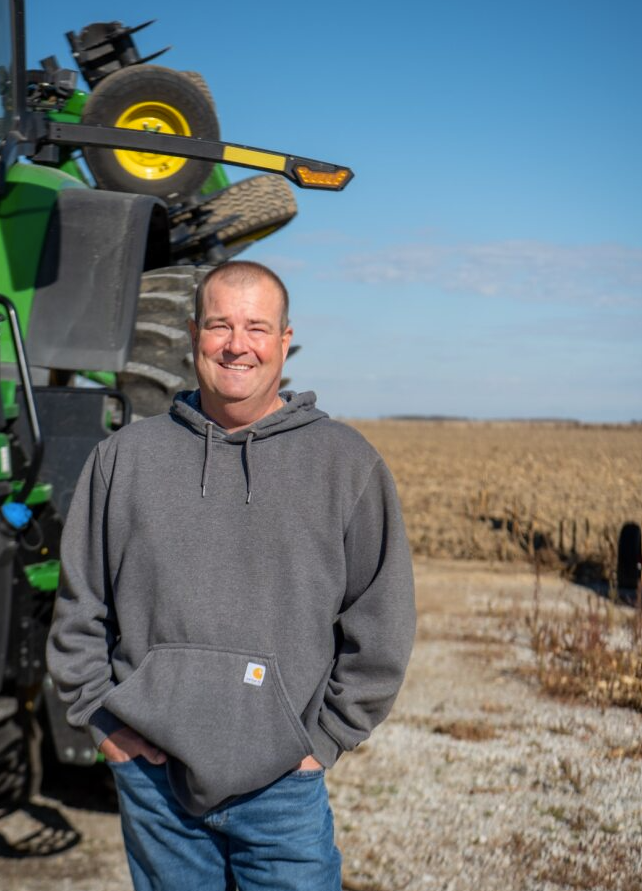
“I’m a fourth-generation farmer,” he said. “I was fortunate to be able to work alongside my grandpa for 46 years. Looking back, that was a joy. We farmed 750 acres. Once I came back, it was kind of go time. I think me coming back at such a younger age put a lot of energy back in the farm to continue growing.”
A desire to give back to his community and a curiosity about the state’s soybean checkoff program eventually led Warpup to seek a position on the Indiana Soybean Alliance Board of Directors.
“Since college, I’ve believed in contributing to something,” he said. “I’ve worked on a couple local boards here in my county. I’ve been on the school board. I’m on county council, currently. At the time, I knew I was going to come off the school board, so I needed something else.
“And my kids were older, and so I could get out a little broader geographically to Indianapolis and beyond. So, I’ve never understood what the checkoff was. I’ve always had questions. I always said, if you want to find out – just jump in. That’s exactly what I did.”
What did he find out?
“I have learned that it takes a lot of people and energy to globally sell or trade our products,” Warpup said. “It’s not as simple as picking up a phone and saying, ‘Hey, I’ve got something to sell. Can you buy it?’ It takes partners and organization. From (the USA Poultry and Egg Export Council) USAPEEC to (the U.S. Soybean Export Council) USSEC, it takes relationship building and coordination to export soybeans or to find new ways to sell our product. That’s probably the biggest thing I’ve learned.”
The checkoff does more than market development work. ISA also encourages farmers to adopt more sustainable farming practices; it develops new soy-based products and educates consumers and farmers about new research. Among his board duties, Warpup serves on ISA’s Sustainability and Value Creation Committee. He admits there were other committees that he would have preferred in the beginning.
“I’ve been on it for four years now; and next year, I want to be on sustainability again,” Warpup said. “I’ve learned so much personally. Being on a board, I think there’s a little bit of selfishness, too, because I learn just as much as I give. We are adopting new sustainability practices on our farm. I want the next generation to have all the opportunities that I have, that my dad gave me, that his dad gave him. If we abuse what we have, then the future generations will not have what I have. We all drink from a well that we didn’t dig. I have incorporated sustainability practices on my farm that I never thought I would do.”
Ag policy advocacy
Perhaps Warpup’s biggest role on the ISA board in 2025 has been as Chair of the Membership and Policy Committee. This group works with federal and state lawmakers to advocate for government policies and regulations that benefit Indiana farmers. This year has been full of political drama for farmers.
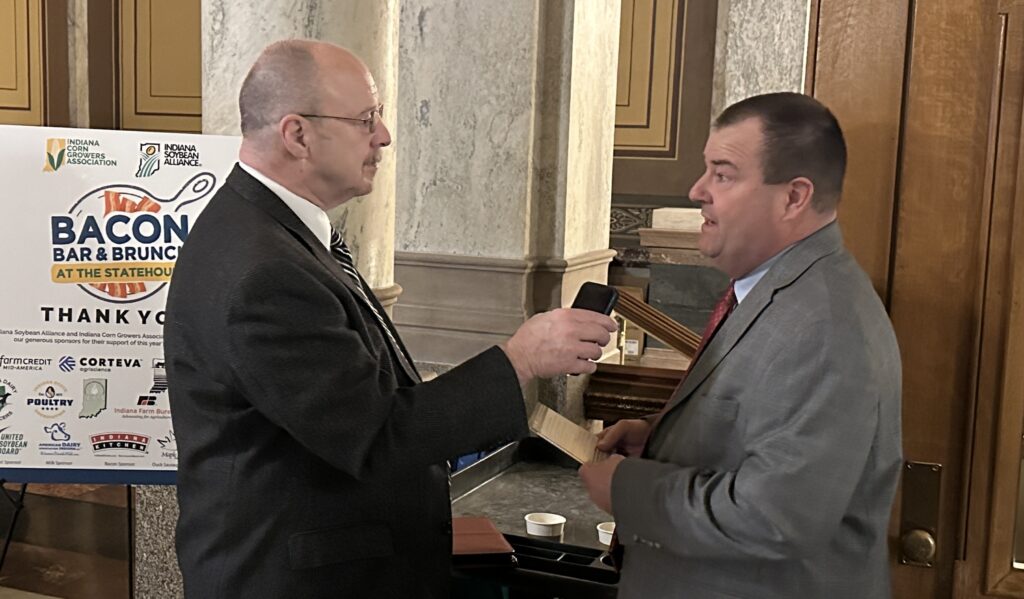
“In 2025, trade has been the big focal point,” Warpup said. “I know we’ve talked about it to death, but on the soybean side, half of our soybeans are shipped outside of the United States in some fashion. When politicians in Washington or Indianapolis make decisions on our behalf, it’s important that we have spokespeople from the agricultural sector to represent what we’re doing out here.”
“Trade is our No. 1 concern, but we also keep an eye on regulations. We have government agencies, like USDA or EPA, that regulate farmers. When policymakers try to add more regulations or stricter rules that will inhibit how we do things, that will impact our farms financially. I think it’s important to, again, to have some say in these discussions from people who are in the day-to-day business of farming.”
Warpup firmly believes that farmers should have a say in the programs they work with and the regulations they follow. He added that legislators far removed from agriculture should not write generic rules that apply to all farms in all states.
“Many government agencies cast all of us farmers into one big category. They may see me as a row-crop farmer,” Warpup said. “What they don’t realize is that somebody who farms 500 acres is completely different from somebody who farms 5,000 acres. Even on my own farm, I have 35 fields. I do not treat all 35 fields the same. They are taken care of separately because they all have different needs to help them reach their potential. I think farmers are the same. My neighbor has different needs than I do. The neighbor next to him has different needs. We are all looking for our full potential for growing a crop.”
A family farm
Regardless of advocating farm policy issues or promoting export opportunities or applying conservation techniques, family is at the heart of it all.
“My dad and my grandpa and all my grandparents are gone,” he said. “Now, it’s my mom, Javonda, and my aunt, Jane. And then it’s my cousin, Darren. Me and my cousin are the ones, the caretakers, I guess, the owner-operators of what’s going on here on the farm.”
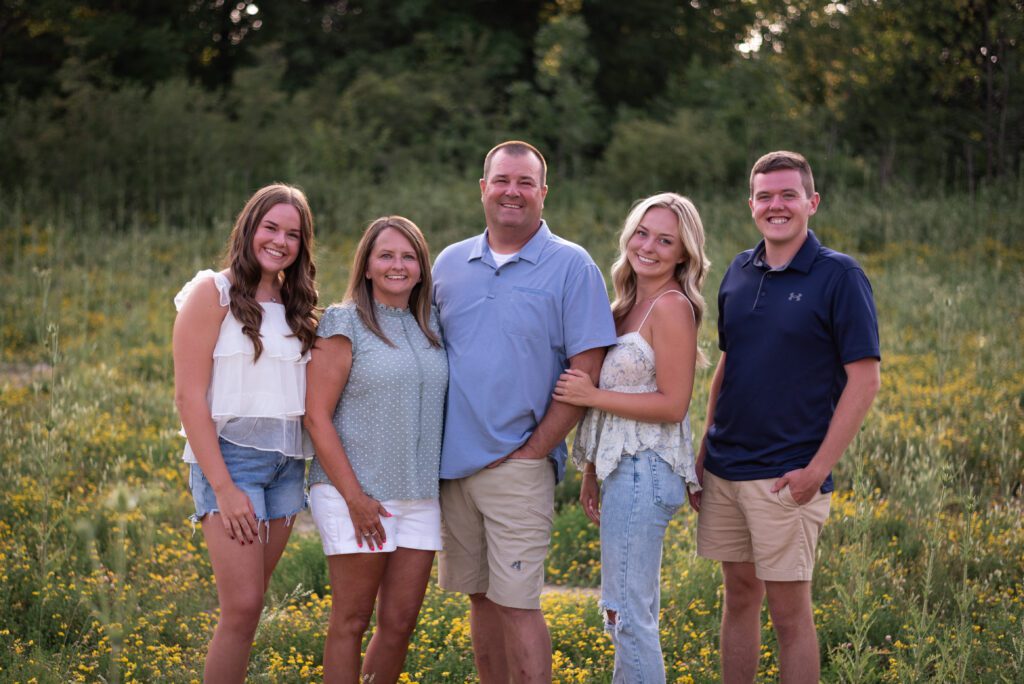
Warpup and his wife, Nicole, have three grown children – the youngest is a student at Butler University. The oldest is their son, Ben, then followed by daughters Hannah and Maleah. There is no pressure on any of them to come back and work on the farm. But he is happy to have had the opportunity to raise them on a farm.
“I thought raising all three kids in the country and having to self-sustain and do chores was very important,” Warpup said. “We were very active in 4-H. Having those responsibilities and farm chores really helped mature my kids into the adults that they are today. I think all three of my children have a strong work ethic. They’ve always had jobs or were doing something. I think that’s because they see what a farmer does. It’s work. I mean, you just work. I think that’s where they get it.”
Posted: November 20, 2025
Category: Indiana Corn and Soybean Post - November 2025, News