Proper 4R nutrient management can help control costs with tight margins
By Ben Wicker, Executive Director, Indiana Agriculture Nutrient Alliance
When harvest wraps, planning for 2026 begins. Margins are tight, and the most expensive input on most grain farms are fertilizer, especially for corn acres.
Proper 4R nutrient management, using the Right Source, Right Rate, Right Time and Right Place, becomes increasingly important. Knowing your baseline, managing for utilization, and scouting for concerns can ensure a healthy harvest and return on investment.
Knowing what nutrients your soil currently holds is key to deciding how much fertilizer to apply. Plan to soil test on a rotating basis, aiming for a test to be taken every two to four years. Between soil tests, we can use resources like the Tri-State Fertilizer Recommendations, plant tissue testing, or corn stalk nitrate testing to estimate the removal of nutrients.
However, the foundation of these estimates falls back on the original soil test. The results of the tests can be used to save money, particularly for soil pH and accurately applying phosphorus or potassium.
Use a Certified Crop Advisor or trained agronomist to help with soil test interpretation and recommendations. Timing of soil testing is important for the long-term. Soil nutrient characteristics are different when testing in the spring or in the fall. Once the timing has been established, one should remain with the same timing for all other all future tests.
Manage for utilization
Crops need a different amount of given nutrients at different stages in their life cycle. Ensuring enough of that nutrient exists at each stage is both an art and a science, as precipitation also affects availability of many of our nutrients.
Overapplication may build the soil bank of a nutrient, but it also may affect water quality coming off the field or contribute to such levels to create a toxic level of a nutrient. Fall application of nutrients needs a stabilizer or cover crop to ensure those nutrients can hold through the winter and benefit the crop months from now.
Spring applied nutrients have to benefit the crop through September or even October maturity. Planning the timing of nutrient application, coupled with the right rate, source, and placement, can allow more efficient use of your fertilizer dollars.
Scout for concerns
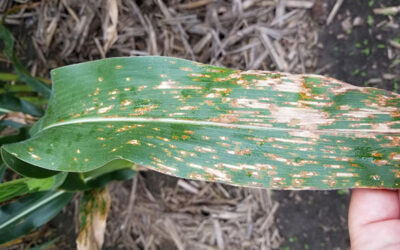
Windshield scouting is a great way to see problem areas in very young corn and soybean fields, but nutrient deficiencies tend to be more prominent in older plants. Field health maps may be able to point out problem areas in fields after the canopy has closed and bare soil no longer factors into the maps.
Drone technology is a labor-effective way to put eyes on the upper canopy and locate problem plants. Plants will send mobile nutrients like nitrogen, potassium and sulfur to the upper leaves and sacrifice lower leaves in times of deficiency, leaving boots on the ground as the best scouting option.
The Indiana Agriculture Nutrient Alliance is committed to serving farmers through education and technical support in our mission of viable farms, healthy soil and clean water. For more information, click here.
Posted: November 20, 2025
Category: Indiana Corn and Soybean Post - November 2025, News