Record attendance, USDA Secretary Rollins create headlines during Commodity Classic
The 2026 Commodity Classic in San Antonio, Texas, Feb. 25-27, was a record-breaking event with more than 12,000 attendees and the largest turnout for the General Session in the convention’s history. This is the second consecutive year of record-setting attendance.
More than 5,100 farmers attended the event at the Henry B. González Convention Center, accounting for nearly 43 percent of total attendance and representing a significant concentration of farm decision-makers. This strong farmer presence reinforces Commodity Classic’s value as a high-impact event for connecting directly with agricultural leaders.
Established in 1996, Commodity Classic is presented annually by the American Soybean Association (ASA) and National Corn Growers Association (NCGA) in conjunction with the National Association of Wheat Growers, National Sorghum Producers and the Association of Equipment Manufacturers.
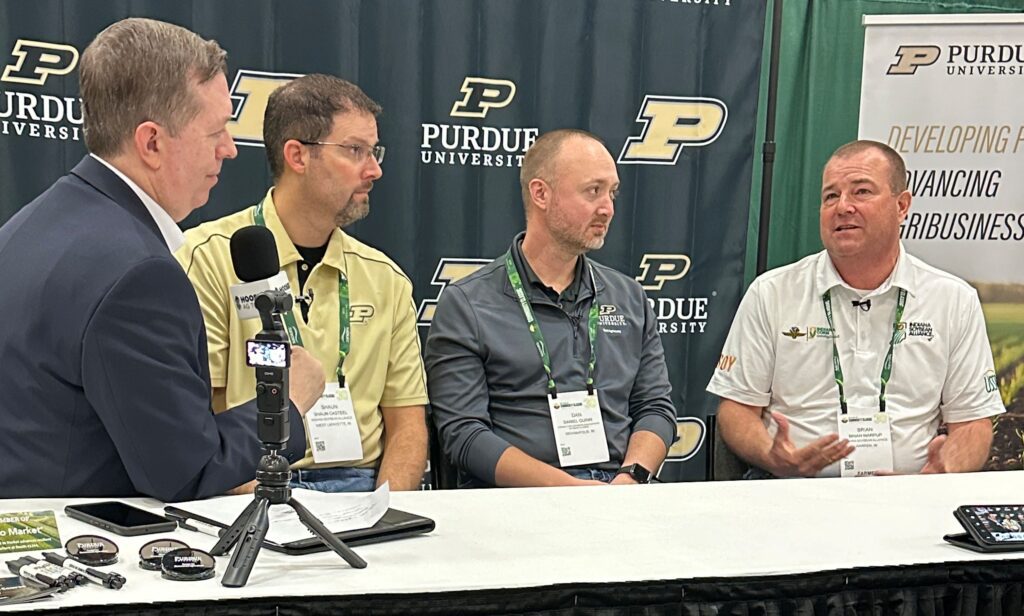
NCGA National Corn Board member J.R. Roesner, a farmer from Ferdinand, Ind., said the Classic is a farmer-led event. “That’s what’s great about this event, is that we have those opportunities to come and to learn more about markets and some of the things that are driving demand,” he said. “We want to make sure that we’re prepared for the challenges that we face in the current environment.”
The Indiana delegation included farmer leaders from the Indiana Soybean Alliance, (ISA), the Indiana Corn Marketing Council (ICMC) and the Indiana Corn Growers Association among other Hoosier farmers.
ISA Vice Chair Brian Warpup, a farmer from Warren, Ind., said the Classic is about making connections.
“It’s about the networking. It’s about the collaboration of fellow farmers. Whether you’re from North Carolina, Indiana, Texas, we’re all farmers, but we all do things differently,” Warpup said. “And, so, it’s really nice to see what somebody else is doing a couple hundred miles away. And this trade show here, it’s the centerpiece. Yet, there’s so much around the trade show as far as education, networking and collaboration. Just meeting with people is a good educational tool.”
The 2027 Commodity Classic will be March 3-5 in New Orleans. “Make sure you sign up for next year. It’s a great event, great way to network, great way to learn about the things going on within our industry and to make great connections,” Roesner added.
Rollins highlighted General Session
USDA Secretary Brooke Rollins toured the trade show floor and delivered remarks during the General Session. This was Rollins’ second time to address Classic attendees as the USDA’s leader.
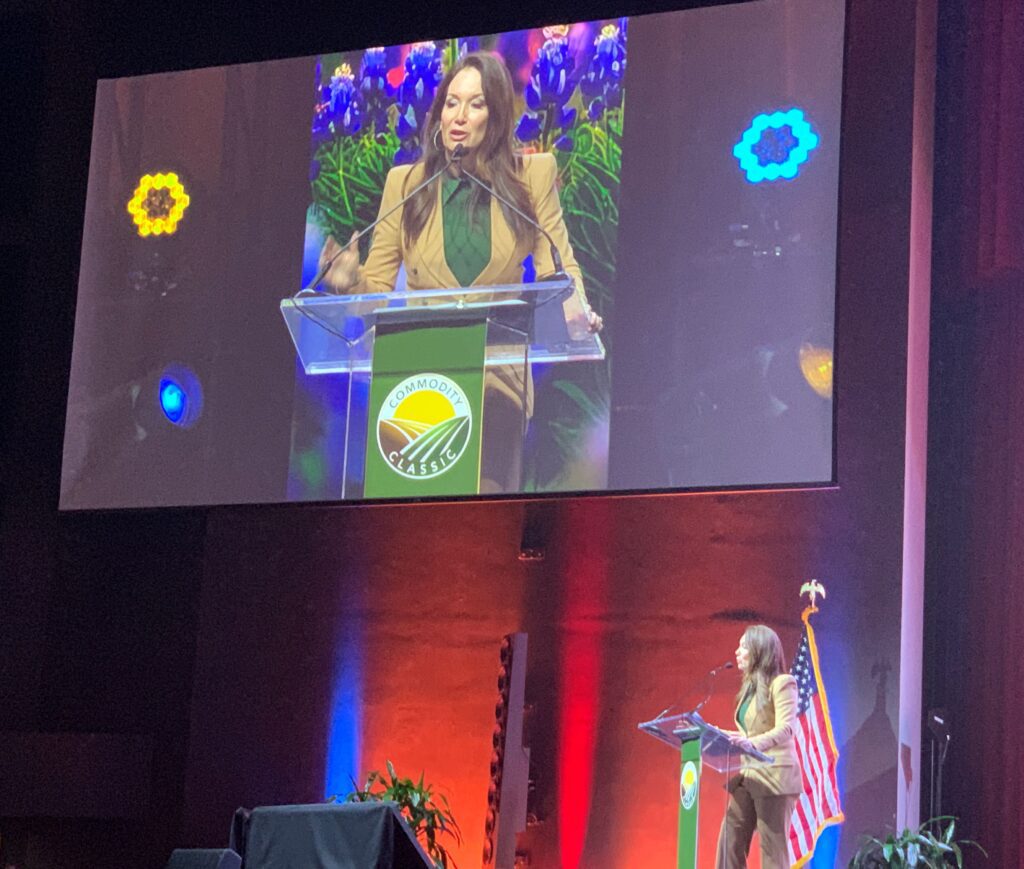
During her General Session speech, Rollins unveiled a new USDA initiative aimed at slashing bureaucratic red tape and clearing the way for farmers to file paperwork faster and easier. “I’m excited to announce officially USDA’s One Farmer, One File initiative, which creates a single, streamlined record that follows you, the farmer, no matter where you go in the USDA system,” Rollins explained.
She said the initiative updates USDA’s tech services in order to bring together all Farm Service Agency (FSA), Natural Resources Conservation Service (NRCS), and Risk Management Agency (RMA) systems to interface with each other and make it easier for USDA staff to get the information they need to provide better assistance for America’s farmers.
ICGA Board member Chris Cherry, a farmer from New Palestine, Ind., said One Farmer, One File may not be a flashy topic, but it’s one that matters. Especially for farmers who are managing different entities.
“I created an account last week on farmer.gov, and on Tuesday of this week I went in and logged in with my password and all of the information for the four entities that I have to file for were right there,” Cherry said. “I clicked on each one of them, and I hit submit, and it was done.”
Rollins also emphasized USDA’s efforts to lock in permanent, year-round E-15 and to slash input costs.
“The tone of this year’s speech was so much different than the tone of last year’s speech,” said ICGA President Alan Dunn, a farmer from Michigantown, Ind. “Let’s cut her some slack. Last year, she’d been on the job a week when she spoke to this convention. But, this year, I felt like it was a much more realistic tone. She could talk about actual accomplishments that had happened in the last year and goals for the administration moving forward. There was a definitive list of actions that this administration wants to take and that was very encouraging.”
He appreciated that working for permanent, year-round E-15 was on her to-do list.
“I wanted to hear if she was going to bring up [year-round] E-15. Not only did she bring it up, she listed it as a priority item and called for Congress to get it done now, and that was music to my ears and music to the convention’s ears,” Dunn said. “I’ve come out of this thinking E-15 still has a pulse, and I’m hopeful that that we’ll have progress in the next two weeks.”
USDA to enhance data reliability
Undersecretary for Farm Production and Conservation Richard Fordyce told farmers at the Commodity Classic that accuracy of USDA reports is a priority.
“We’ve mentioned several times while we’ve been here, a technology modernization as it relates to acreage reporting and maybe production reporting for (the Risk Management Agency) RMA and how those advancements and how that may be more accurate acreage reporting, more timely,” he said.
Fordyce added that the department relies heavily on farmer-provided information.
“Farmers aren’t as good as they probably should be in filling those surveys out,” he said. “So, my encouragement would be to, when you see that survey from National Agriculture Statistics Service, open the envelope, fill it out, send it back. That just helps inform the reports that they do.”
He said the goal is for the USDA to release timely and accurate information that is useful for farmers.
“I think they’re doing it the best that they can given the data they have access to and the timing of the data they have access to,” Fordyce explained. “Some of that can be difficult because when those reports come out, maybe all the data is not available, yet.”
The USDA said it will use the information to consider future program direction, new initiatives, and potential funding opportunities.
Posted: March 20, 2026
Category: 2026 Commodity Classic, 2026 Events, Indiana Corn and Soybean Post - April 2026, News