Harvest a natural time to make 2026 planting season decisions

By Chris Cherry, President, Indiana Corn Growers Association
Harvest has just begun in parts of Indiana, and as the Old Dominion song goes, “the days will be long, but the years will fly right by.” Isn’t that the truth? The summer has flown by, and now with harvest upon us, our focus shifts to getting the crop out of the field.
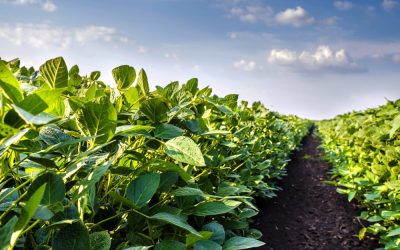
This time of year always brings a sense of urgency. We try to make the most of every hour of daylight. I learned long ago that when it comes to cutting soybeans, you need to take advantage of every good day. September is the best time for soybean harvest — longer days and typically warmer weather allow for those big, productive days.
But by late October, the weather becomes much more unpredictable, and the “great” soybean days are mostly behind us.
Someday, I’d like to survey other farmers about their “terminology” for harvesting soybeans versus corn. I always say that I’m “cutting soybeans” or “shelling corn.” My wife believes I have those phrases backwards because we “cut the corn off the cob” and “shell the soybeans out of the pod.”
To me, soybean harvest is a sprint, while corn harvest is a marathon. Once soybeans are in, corn becomes about showing up every day and chipping away — trying to make a dent in the operation, one field at a time. I love harvest time and the smells of fall. Each year I look forward to bringing in the crop.
Harvest is also a natural time to begin thinking about planting plans for the 2026 growing season.
- Do we stick with our usual rotation?
- Should we plant less corn this year?
- Are we going to plant wheat?
- Where do we see the best chance to break even — or better yet, make a profit?
These questions are always part of farming, and the “right” answer is different for every farm.
A recent series of stories published by NCGA’s Krista Swanson highlighted high production costs. Input prices compared to commodity prices are at a spread we’ve only seen a few times in the last 40 years.
In fact, the last time we saw something similar was between 2012 and 2016. Since 2012, the adjusted cost of producing corn has remained high. According to the article, there have only been three years where corn prices were relatively strong compared to cost of production: 2012, 2021, and 2022.
According to a report from NCGA, the average cost to grow an acre of corn in 2025 is $897 per acre which is 3 percent lower than the peak in 2022. The main difference in these two years is that nearby futures contracts topped near $8 per bushel in 2022 while corn is currently below $4 per bushel.
The average break-even price for corn is $4.75 per bushel which puts the average farmer facing a loss of 85 cents per bushel.
NCGA added that companies can adjust prices to stay profitable or at least viable. Unfortunately, those higher costs often get passed down to farmers. It seems like we always end up taking the hit.
This is another reason why our work within the Indiana Corn Growers Association (ICGA) is important.
We continue to push for legislation that brings value to our commodities. One of our top priorities remains E15 — it’s the first thing we talk about when a meeting starts, and the last thing we bring up before we close. Expanding access to E15 is critical to creating demand and bringing stability to corn markets. We are always looking forward to new uses and demands for the corn that we produce.
As you head into harvest, I hope you stay safe and productive. Take advantage of every good day. Reflect on the season but keep an eye on what’s next. Whether you’re sprinting through soybeans or settling in for the corn marathon, remember that your decisions now will shape your future success.
Posted: September 13, 2025
Category: ICGA, Indiana Corn and Soybean Post - September 2025, News