
Indiana farmers and Låkril Technologies help replace petroleum with corn-derived coatings
By Anita Sharkey
The Indiana Corn Marketing Council (ICMC) is turning conversations into real progress. One major opportunity involves acrylic acid, which is a key ingredient in common products like house paints, adhesives and even the absorbent material in diapers.
For years, the chemical industry has been trying to make this product from plant-based sources instead of petroleum. If successful, this shift could reduce reliance on fossil fuels and open the door to cleaner manufacturing.
Major global companies have spent decades trying to develop a viable biobased pathway, yet none have been able to make the economics work. That longstanding challenge is exactly why ICMC chose to support an emerging startup, Låkril Technologies, which believes they have the chemistry needed to make this shift possible, and profitable.
Låkril was cofounded by chemical engineer Dr. Chris Nicholas, whose catalyst technology has shown promising early results in converting lactic acid into acrylic acid. Lactic acid is made through fermentation of corn-based sugars, much like ethanol. Theirs is a process that uses corn to create lactic acid and then converts the lactic acid into acrylic acid intended for coatings and adhesives.
Lakril’s catalyst produces acrylic acid at much higher yields than previous methods, a breakthrough that could help shift this important chemical and the resulting paints, coatings, and diapers from being petroleum-based to being made from corn grown across the Midwest.
“Låkril does a great job of straddling sustainability and value creation,” said Corey Crafton, ICMC’s Value Creation Research Consultant. “They’re creating something new, but they’re also building a market that strengthens demand for corn. That’s why this matters to our farmers.”
The potential impact is clear. Låkril was just recognized as one of the Top 10 Startups to Watch by Chemical & Engineering News, the primary trade journal in the chemical industry. If Låkril’s process scales successfully, it could create a new and meaningful market for corn based sugars and ethanol. Instead of being used only for fuel, ethanol could become the starting point for producing other products such as automotive paints. Because the process relies on fermentation, the value chain begins with corn, something Indiana is top five in producing.
Today, Låkril is in the testing phase and preparing to launch a continuously operating pilot plant in Chicago. From that site, the company will produce sample quantities for manufacturers to test in real-world products. The pilot facility represents a significant step toward commercialization and a chance to show the technology can operate reliably outside the lab.
If the process continues to perform well, commercial facilities could be built next to existing ethanol plants using an approach the industry calls “over the fence.” Rather than constructing an entirely new site from the ground up, Låkril’s technology could be added alongside an ethanol plant that already has utilities, rail access, and zoning in place. That model reduces costs and makes it easier for rural communities to benefit from new business development.
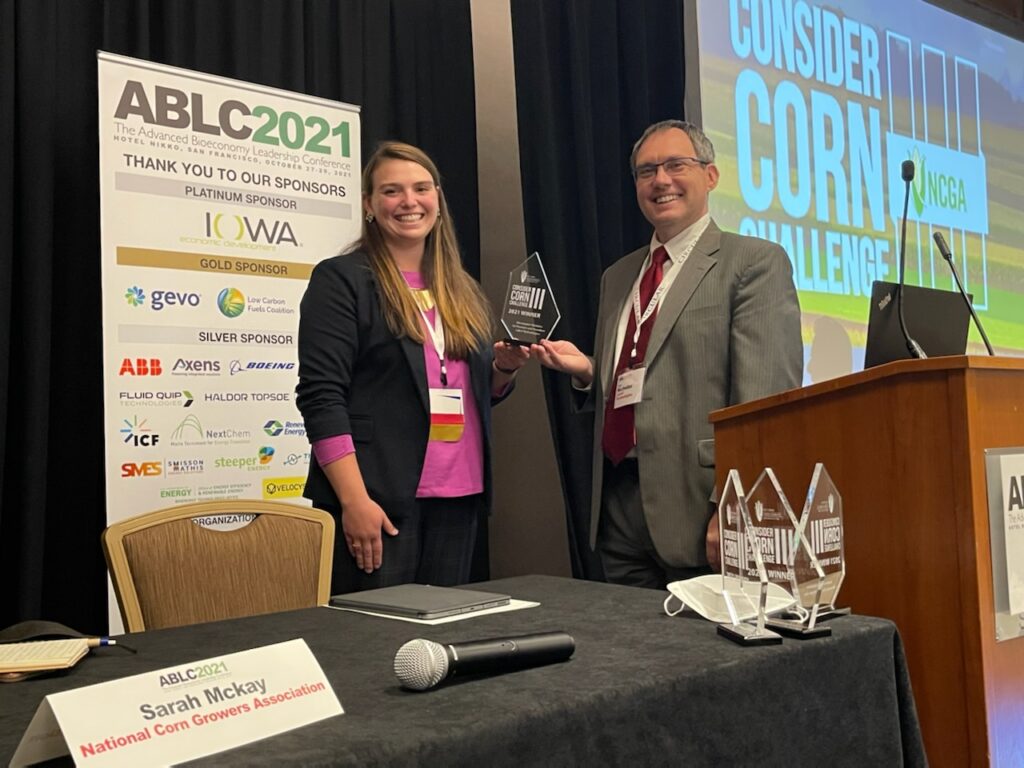
Farmer checkoff dollars have helped make this progress possible. Låkril received early support from the National Corn Growers Association through the Consider Corn Challenge and has been funded by ICMC since 2022 for research projects on the path to commercialization, each new farmer elected board finding the project promising enough to continue funding.In particular, Nicholas and the Låkril team showed how to use low cost and/or impure feedstocks in ICMC funded work to improve production economics and thereby commercialization opportunities.
It is important to note that while Låkril’s work is rooted in corn-based sugars and ethanol, the broader shift toward bio-based materials also strengthens the outlook for soy. As industries seek alternatives to petroleum-derived products, soy-based chemistry becomes increasingly relevant. Expanding the overall biobased materials sector supports the long-term strategy of both checkoff organizations: growing demand for Indiana crops in high-value markets.
Låkril Technologies’ journey is just getting underway, and the momentum ahead could directly benefit Indiana agriculture because Indiana offers a variety of wet and dry mills as well as formulation plants for coatings and adhesive end products. As their pilot plant launches and commercialization takes shape, ICMC is committed to helping turn these breakthroughs into tangible wins for Hoosier farmers.
Posted: January 27, 2026
Category: Indiana Corn and Soybean Post - January 2026, News, Value Creation