SwarmFarm Robotics: Designed by farmers for farmers
By Anita Sharkey
When it comes to innovation in agriculture, SwarmFarm Robotics stands out as a story of practical ingenuity. Founded by Australian farmers Andrew and Joice Bate on their farm along Australia’s east coast, the husband-and-wife team is redefining what automation means in the field.
Their story shows how curiosity, hands-on experience, and a drive to solve real challenges can transform the future of farming.
SwarmFarm began in 2010 with a simple but powerful idea. Farming does not need to get bigger to get better. Andrew, who came from an agronomy background, and Joice, who grew up on a sheep and cattle farm, were frustrated by the rising cost and scale of modern machinery. “If farming just keeps getting bigger, we will ultimately damage soil and drive up costs. It is not feasible,” Andrew explained. “The next step cannot be just adding more horsepower. We needed a smarter solution, not a bigger machine.” Big machines will always be essential, but these smaller robots can take on specific jobs more gently, helping reduce compaction and improve efficiency.
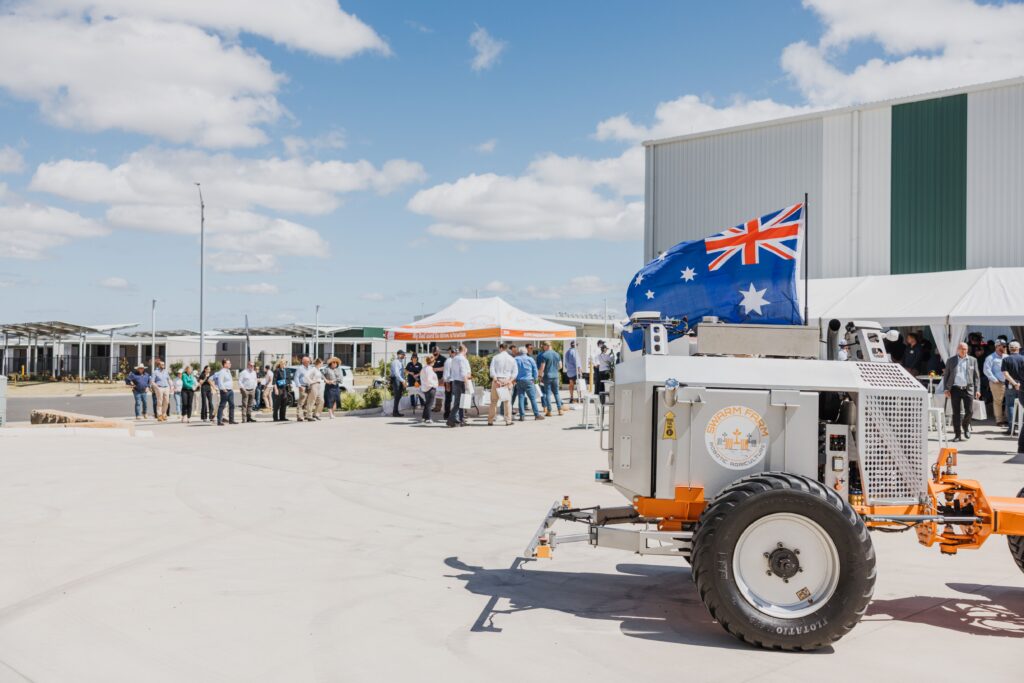
Their solution is SwarmFarm Robotics, a suite of lightweight, low-cost, autonomous robots designed to perform a variety of tasks including spraying, mowing, weeding, and orchard work. Designed to complement traditional equipment, these robots operate with a lighter footprint, helping reduce soil compaction while improving overall efficiency. Each machine is rugged and practical, allowing farmers to fix problems in the field without relying on dealers or expensive service calls. “We built these robots to solve problems for the 3 a.m. breakdowns when a farmer does not have time to wait,” Andrew said. “They are designed by farmers, for farmers.”
SwarmFarm fleet technology allows for precise applications that improve crop yields, alter plant growth where necessary, and maximize overall efficiency. Over time, these smarter practices have the potential to lead to better soil health, more consistent crop quality, and reduced input costs. With thousands of operating hours logged across farms in Australia, the results speak for themselves. A single Swarm robot can operate for more hours than a traditional tractor, providing greater flexibility during critical periods such as planting, weeding, and harvesting.
The company’s SwarmConnect platform allows other technology developers, including See & Spray, to integrate seamlessly with their robots, giving farmers customizable options and access to a growing ecosystem of tools. With four different robot models available, farmers can select the technology that best fits their operations, whether it is for vineyards, orchards, or broad-acre crops.
SwarmFarm is now expanding to the United States, and Indiana is part of that story. The first Swarm robot in the country operated at Beck’s, where it was featured during Becknology Days this past August as part of the field tours at Beck’s Hybrids headquarters in Atlanta, IN. Visitors saw firsthand how the robot handled spraying in the field. The robot scans the field every few days and sprays any active weeds. Guests also had the chance to ride behind a self-driving robot during the tours.
SwarmFarm’s philosophy feels right at home with Indiana farmers. The Indiana Soybean Alliance and Indiana Corn Marketing Council are excited to see technology like SwarmFarm’s taking root. These robots represent more than progress in automation, they reflect the spirit of Indiana agriculture: innovation built on experience and change guided by those who know the land best.
Posted: November 20, 2025
Category: Indiana Corn and Soybean Post - November 2025, News, Sustainability