Conservation Cropping Systems Initiative program highlighted at Purdue Field Days
By Scott Gabbard, Senior Administrator, Purdue on the Farm
It happens almost every year in August, and this time it happened twice. We experienced two periods during the month when the nighttime temperatures dipped into the 50s – maybe even the 40s for some – and the daytime temperatures were in the mid-70s.
The sky was bright, the air was dry, and the teenager trapped inside this middle-aged man’s body knew that football was just around the corner. The three-a-day practices were also recalled but immediately pushed back into a dark corner of memories best forgotten.
August also marks the month of the State Fair and Field Days. All of the Purdue Ag Centers (PACs) hosted their annual tours, and some of us were fortunate enough to travel across the state line to see the Farm Progress Show. The same can be said of the commercial ag companies.
In every case, it was interesting to learn about some of the latest-greatest ideas or future products to be rolled out onto farms or into farm fields. Some ideas are old but need to be retold.
Ag 101 workshop
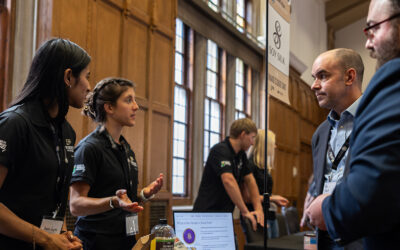
Last year, the Conservation Cropping Systems Initiative, in partnership with Purdue Extension, piloted an Ag 101 workshop for those who serve the agricultural row-crop community but are new to agriculture at Purdue-ACRE. This July, Purdue on the Farm took the leadership role and offered it at ACRE, NEPAC and SEPAC to make it more readily available to these new employees throughout the state.
Many branches of the USDA-APHIS/FSA/NRCS, IDEM, DNR, OISC, SWCD’s and other conservation partners participated. We utilized the PACs so that participants could get out into the fields and see a variety of equipment used on farms specifically for corn and soybean production.
There were revisions from the previous year’s pilot to accommodate travel and time restrictions.
Overall, feedback from the 70 participants indicated that they appreciated the effort made to give them a holistic year-round view of the planning, paperwork, machinery and management of the crop itself to operate a grain farm in Indiana.
Highlights for the participants included the machinery overview and the ability to walk out into the fields and examine the crops in smaller group settings. With a special thanks to your support and support from USDA-SARE, we will host these trainings again next year.
A last look before harvest
As the growing season winds down, county extension educators and state staff are out taking one last look at the fields before harvest.
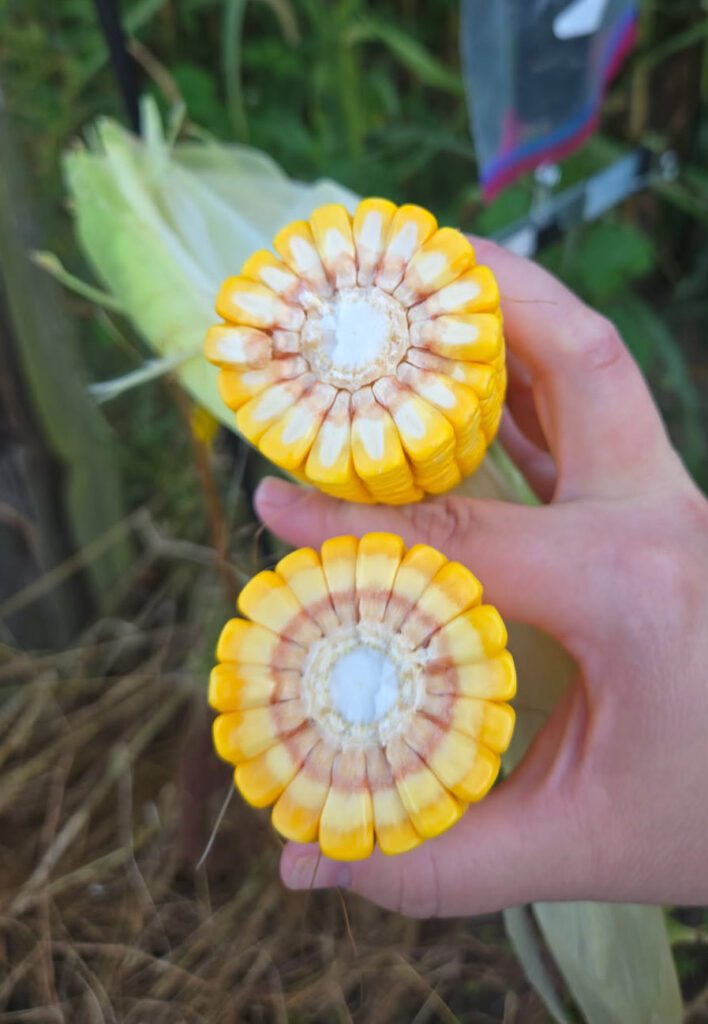
They are counting kernels and pods to take a best guess of their fields’ final production. They are also looking for weed, insect and disease pressures that may affect harvest outcome. Soon, some of them will ride in cabs to see whether the on-farm trials provided direction to the ideas thought up last winter.
For many, this is a favorite time of year when we reap what we sow. If the author were to give any advice to everyone as we head into harvest this year, it would be this: go check your fields and have a conversation with your agronomist about the overall standability or lodging susceptibility of each field.
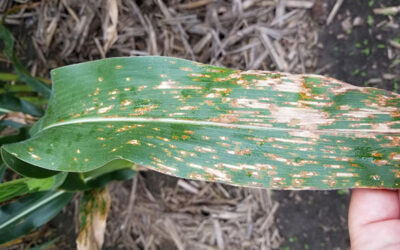
Consider adjusting your harvest schedule based on this input. In corn, this wet(ter) growing season has led to a whole host of diseases with the potential to weaken stalks. In bean fields (and maybe corn), burcucumber and other ground vines have gone wild when left unchecked.
Also in bean fields, this is the time when soil borne diseases become apparent. What is it? Sudden Death Syndrome (SDS)? Brown Stem Rot (BSR)? Red Crown Rot (RCR)? While there is no RCR fix yet, your seed selection this winter should be influenced by SDS and BSR prevalence.
While only one-eighth of the fields sampled this year were positive for SCN, one-third of the fields sampled the previous year did test positive. Fields that will most likely be planted back to beans in 2026.
Soon, we will see the Saturday night lights on football and farm fields throughout the state. It is hard, rough, painful and exciting – sometime all at the same time. May your teams both in the cabs and locker rooms experience more wins than losses this year.
Posted: September 13, 2025
Category: ICMC, Indiana Corn and Soybean Post - September 2025, ISA, Market Development, News, Purdue University