Scarborough believes in growth, family and the future of farming
By Dave Blower Jr.
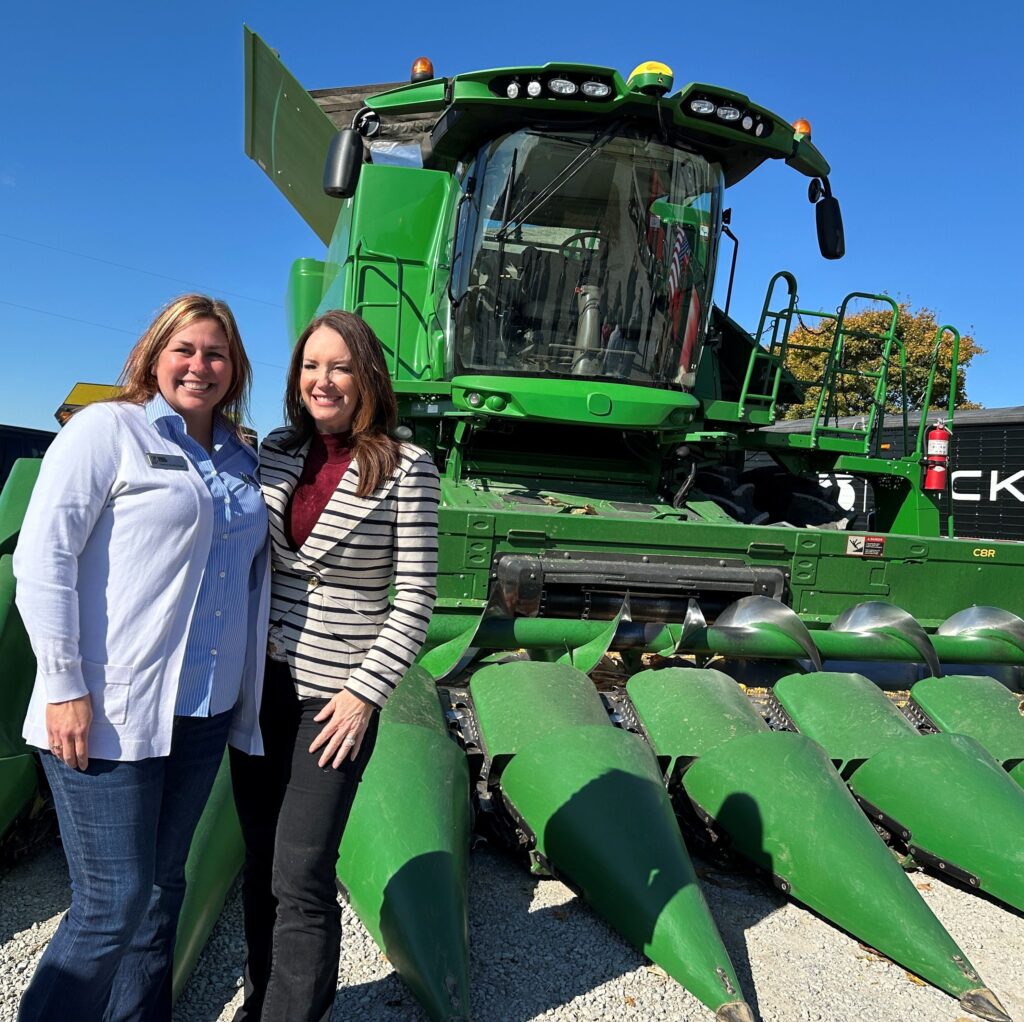
Indiana Soybean Alliance (ISA) Chair Denise Scarborough, a farmer from La Crosse, Ind., will finish her nine years of service on the board later this year. In that time, she has promoted the creation of new items made from Indiana soybeans; she has signed agreements to ship soybeans to foreign customers; she has supported new sustainable techniques to grow row crops – among other accomplishments.
Also a wife, a mother and a farm loan officer at a community bank, Scarborough believes in getting the most out of every opportunity. Although she’s happy to give time to ISA, the American Soybean Association (ASA) and other farm groups, Denise admits that she receives just as much in return.
“The biggest benefit of being involved in organizations like ISA and ASA is the relationships – learning from other farmers, sharing ideas and improving what we do,” Scarborough added.
“I will say it is a lot of work to be on the ISA and ASA boards at the same time. I’ve always liked the political side and the different aspects of working for good farm policy. Both checkoff and policy work is built on solid relationships.”
Relationships build a farm, too
Denise and her husband, Mark, met while participating in 4-H as high school students, and they continued to date while attending Purdue University.
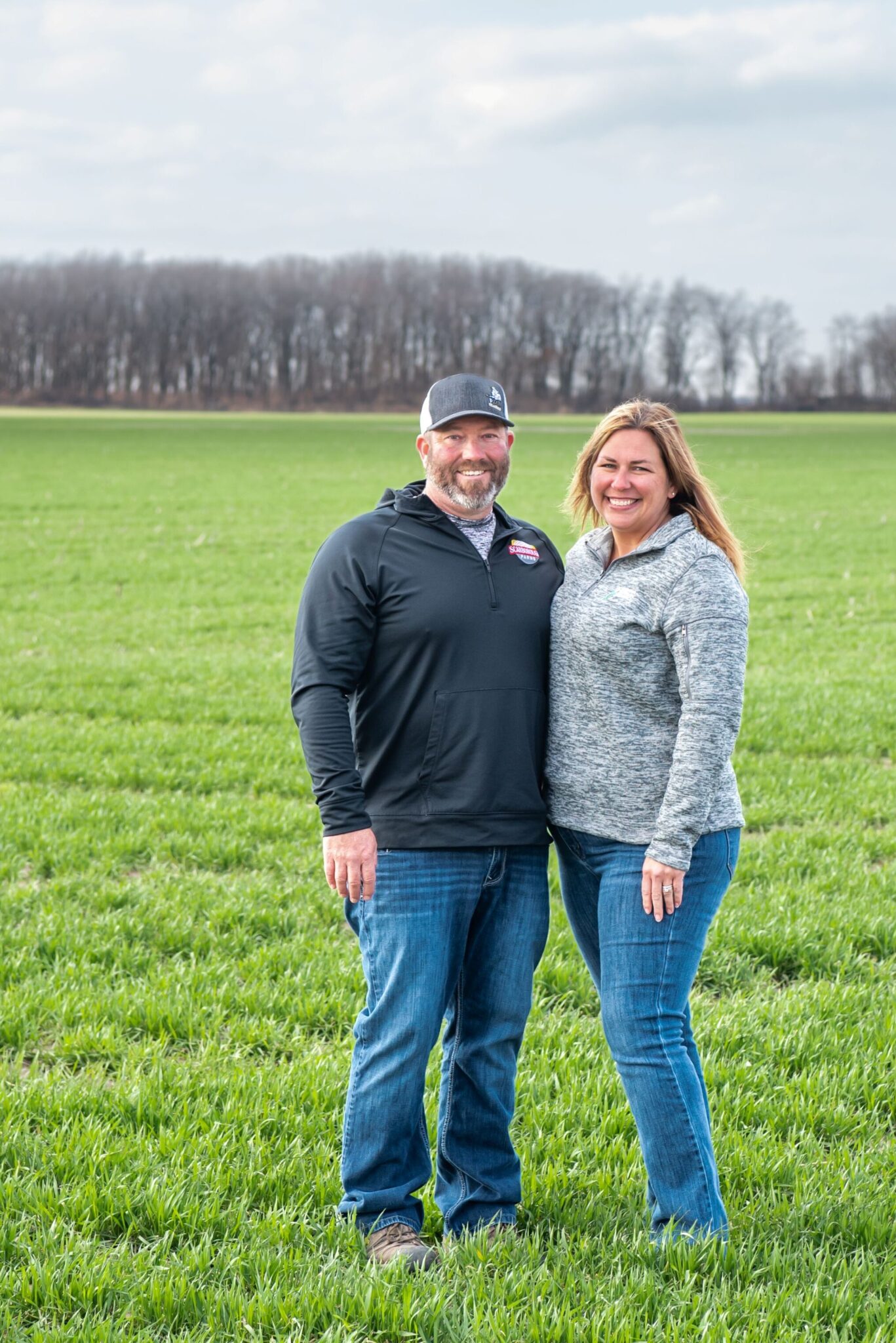
“I swore I would never marry a farmer, and I would never move back home,” Denise quipped. “And, yet, here I am.”
Mark replied, “You’re 30 miles from where you grew up, so you didn’t move back home.”
Denise was raised on a farm and enjoyed the experience. She made the most of her opportunity.
“Both my dad and my mom were very active on their farm,” Denise said. “My dad farmed full time, and my mom taught school. When my brother and I were little, my mom quit teaching and started working full time on the farm. My parents were adamant that I knew how to operate equipment and do those things. That has really helped in the long run. I’ve worked a lot of ground that Mark has planted.”
Similarly, after the Scarboroughs took more ownership of Mark’s family farm, he was able to quit his full-time job to focus on farming 13 years ago. They are the third generation of his family to work the farm. Their children, Madison, 17, and Parker, 13, represent the fourth generation.
Denise, who has a Purdue degree in agricultural economics, sales and marketing, works as a farm loan officer at a community bank. She appreciates those relationships, too.
“I enjoy my job,” Denise said. “It is interesting to be a lender in the community where you live. It’s nice being able to help neighbors purchase farms, purchase equipment or help them to expand their operations. The fun part of the job is being able to help people in either a time of need or in a time of success.”
In addition to family, the Scarboroughs have three employees – Kevin Ketchmark, Cory Brust and Zach Brust – who they said are “like family” today.
Diversification and resilience
Mark’s family has owned their farm for nearly 100 years, but he said it has changed significantly through the years. The farm has produced everything from mint to seed corn, along with partnerships to grow vegetables like cucumbers, potatoes and tomatoes. Access to abundant water and well-drained sandy soils has allowed the operation to remain flexible and productive. Today, the farm produces soybeans, corn, wheat and seed corn along with double-cropped soybeans.
Recent opportunities have allowed the Scarboroughs to expand their operation to farm across a 25- to 30-mile area. “That’s been a benefit,” Mark said. “When there’s drought in one area, it’s usually fine in a different field. The same applies when there’s too much or too little water. It helps manage risk.”
They’ve also adopted innovative practices, like interplanting soybeans into wheat ahead of wheat harvest to extend the growing window and improve double-crop soybean yields.
Sustainability practices have become a major focus, as well. “About 70 percent of our acres now use cover crops,” Mark noted. “We’ve moved toward reduced tillage, too.”
Denise was the chair of ISA’s Sustainability and Value Creation Committee in the past. She added that they have added many growing techniques that she has learned through her time on the ISA board.
Giving back to agriculture
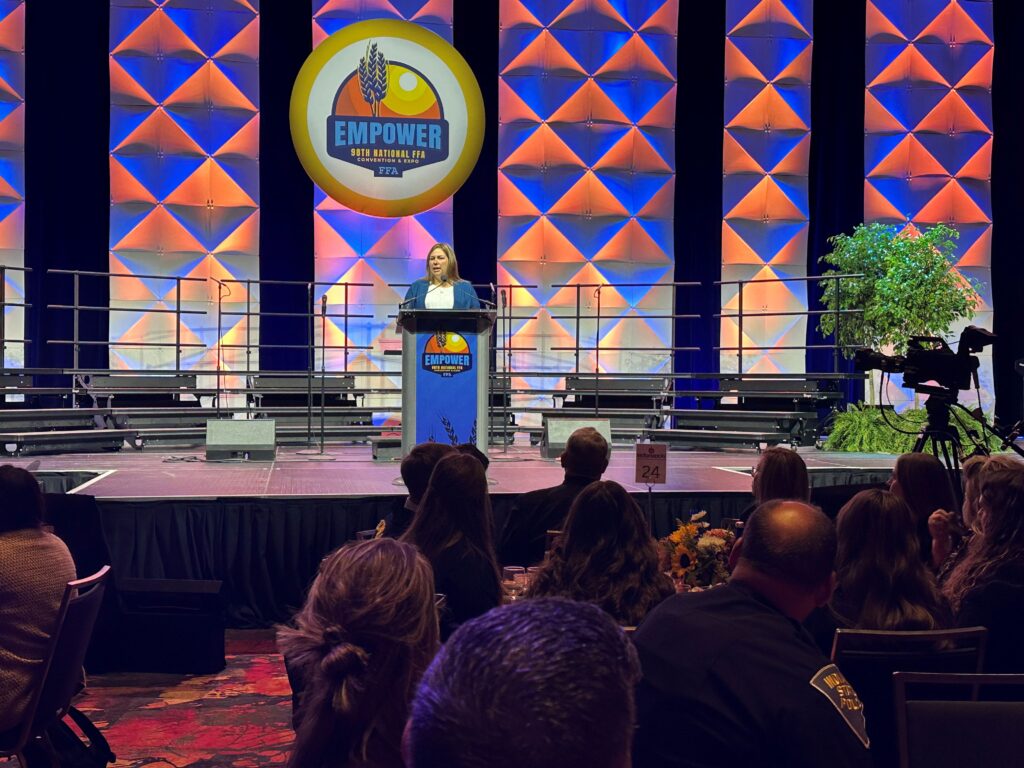
Through their children, Denise and Mark have been involved in 4-H and FFA. They were also involved in Indiana Farm Bureau and the American Farm Bureau Federation’s Young Farmer and Rancher Committee. Denise was recruited to ISA from a pair of former board members.
“We were looking for the next things to do – the next way to continue serving agriculture,” Denise said. “When I was recruited to ISA, I didn’t really know what the checkoff did. I have learned a lot over the past nine years. ISA is a grassroots organization; it is farmer driven. We are very diligent with our checkoff dollars.”
She listed the Student Soybean Innovation Competition and the Glass Barn at the Indiana State Fair as two of ISA’s programs that she enjoys. The Student Soybean Innovation Competition invites Purdue students to create new products made with soybean ingredients. The Glass Barn is an interactive facility dedicated to teach non-farmers about agriculture. The Glass Barn attracts thousands of visitors each year during the Indiana State Fair, and Hoosier farmers from across the state volunteer during the fair.
“The Glass Barn is one of my favorite things, not only to walk through, but also to volunteer for,” Denise said. “My family has volunteered in the barn. I love seeing the things that we’ve been able to do through it, the amount of consumers that we reach year in and year out. I don’t know too many other states that do the type of outreach that we are capable of doing through the Glass Barn.”
From the farm to the world
Denise’s work extends beyond the farm gate. Through her involvement in soybean organizations and checkoff programs, she has participated in international trade missions — experiences that have reshaped her perspective.
“These aren’t vacations,” she said. “You’re traveling long hours and meeting directly with decision-makers who influence entire countries’ purchasing decisions.”
One trip to Dubai stood out. “We were sitting across the table from someone making agricultural decisions for Saudi Arabia,” she recalled. “Then we visited a facility and saw products connected back to crops grown here in Indiana. That was a full-circle moment.”
In Egypt, despite heavy security, the impact of relationship-building was clear. “Those buyers want to know you. They want trust and consistency,” she said. “If we’re not there building those relationships, someone else will be.”
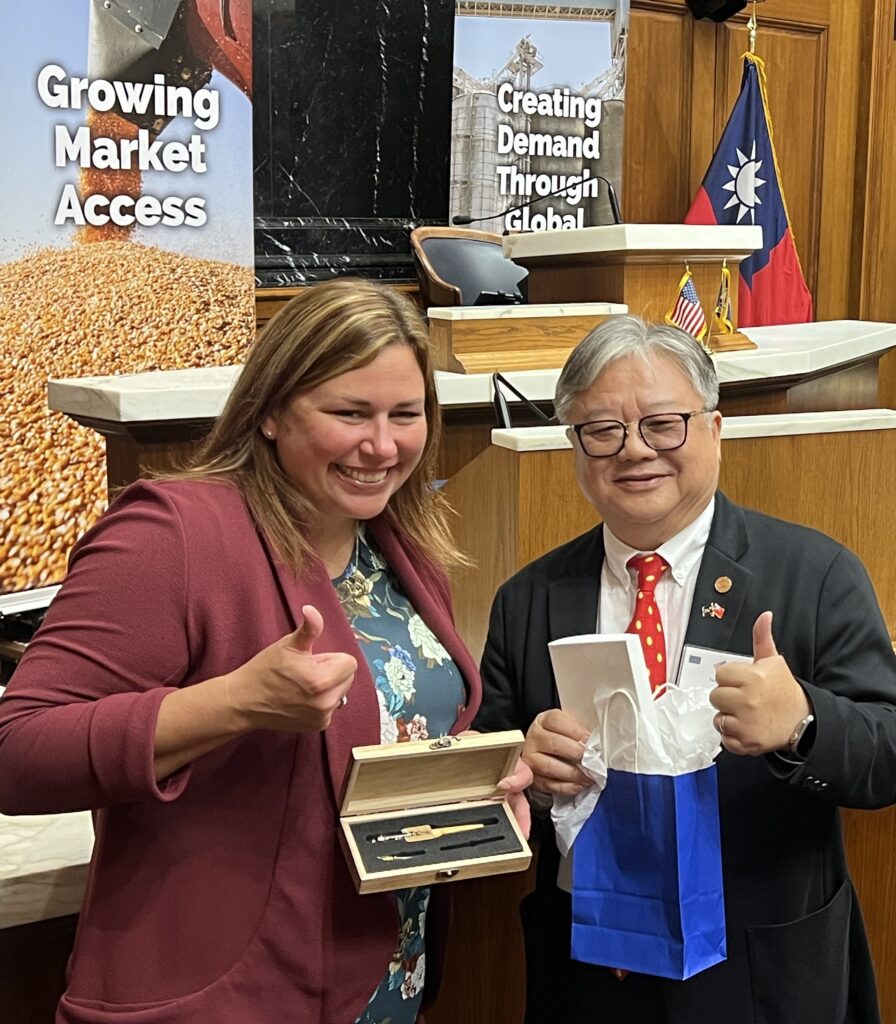
Last year, Denise signed a Letter of Intent with officials from Taiwan who agreed to buy $4.2 billion of U.S. soybeans from 2026 through 2029. She said farmers must work to develop these new markets because farmers are their best advocates.
“The quality of U.S. crops is important, but relationships and trust matter just as much,” she said.
Whether through trade missions or local organizations, Denise emphasizes that relationships are at the heart of agriculture’s future. As they look ahead, the focus remains clear: sustain the farm, support the next generation, and stay connected — to the land, to their neighbors, and to a global agricultural community that depends on both.
Posted: March 20, 2026
Category: Indiana Corn and Soybean Post - April 2026, ISA, News