Conservation, no-till is the foundation for Lamb family farm in Boone County
By Amie Simpson
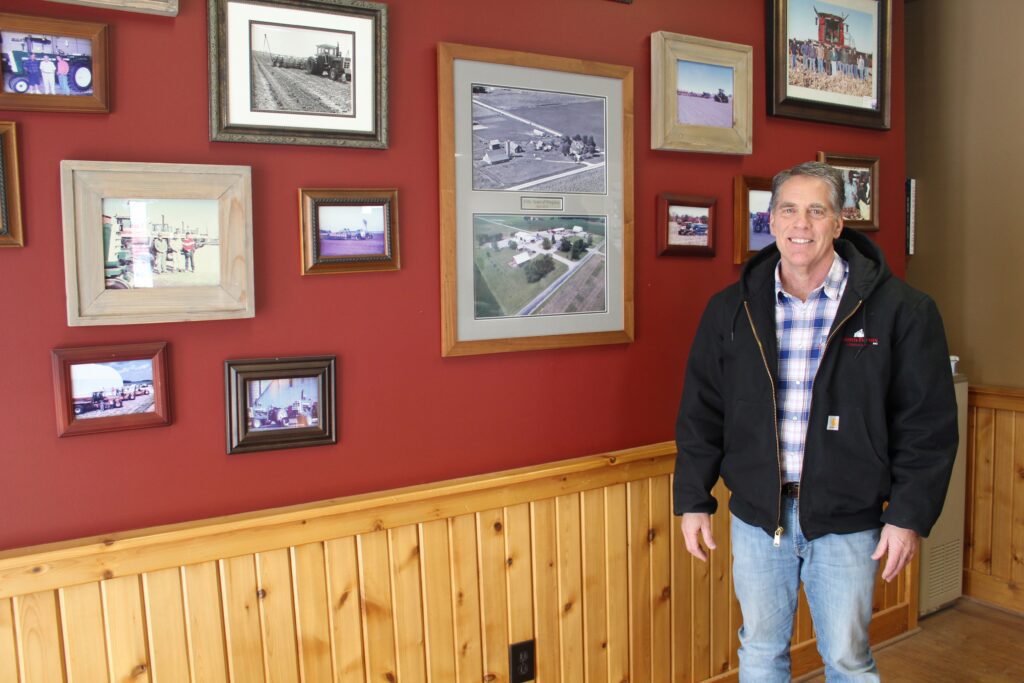
As a second-generation farmer and director of the Indiana State Department of Agriculture, Don Lamb sees the industry from both the fields of his family’s farm and the corridors of the Indiana Statehouse, a vantage point not many can claim.
“My appreciation for farmers has grown,” Lamb said. “When I stepped away from the farm for the first time in my life, I began to see just how much farmers carry every day. They’re too close to it to realize they get an incredible amount done while dealing with constant unknowns.”
His perspective has also widened beyond the farm gate. “I’ve gained a deeper appreciation for what I call ‘Team Ag Indiana.’ I try to shine a light on what ag organizations and companies are doing to support farmers across the state.”
Lamb’s roots are planted on the family farm in Boone County, where he grew up working alongside his dad, Bob, and his brother, Dean. Today, they continue to work together, joined by Dean’s two sons and a team of 10 full-time employees.
They grow corn, soybeans, wheat, and popcorn while blending expertise with careful stewardship of the land. “Reducing soil erosion and maintaining farmland for future generations is a priority,” Lamb said.
Conservation as a foundation
They started looking at no-till practices to lower input and labor costs. The farm has been practicing no-till farming since the early 1990s, starting with soybeans before moving to corn. “What does conservation look like on our farm? No-till is our foundation, followed by grassed waterways and cover crops to help prevent soil erosion, improve soil health, and reduce runoff,” he said. “We’ve been planting cover crops for about a decade and continue to make adjustments each year to improve.”
Conservation practices on Lamb Farms are supported not just by philosophy, but by precision technology that improves both efficiency and environmental impact.
Lamb said GPS-guided equipment allows for precision planting and fertilizer application.
“No till, for example, is already efficient, but then every pass is even more valuable because you’re not going to make very many passes across the field,” he said. “We make every pass count by keeping good records and being very specific about what we do on that pass across the field.”
While the return on investment isn’t always visible, Lamb said the results are clear over time.
“I can tell you that our soil is in better shape today than it was 10 years ago. We have better water infiltration, soil fertility and overall soil health,” he said. “The conservation efforts have flipped a switch to where the soil is constantly regenerating itself.”
As public perception and market pressures push agriculture toward sustainability, Lamb said ignoring conservation could leave farmers unprepared for the future.
“There is a learning curve to implementing a new conservation practice. Go slow and start small,” Lamb said. “For example, try no- or minimum-till in soybeans before moving to corn. Then explore which cover crops work best on your farm, starting with just a few acres before expanding.”
Diversifying the operation
Conservation is one piece of the puzzle. Building a resilient farm business requires diversification, too. Lamb Farms has embraced diversification to strengthen its operation and explore new opportunities.
AgRecycle is a 10-acre compost manufacturing site that converts regional organic waste into nutrient-rich compost, helping build soil organic matter for area farms. Different kinds of manure, food waste, yard waste, woodchips and more eventually become fertilizer components on the farm. The fields they manage get a minimum of 5 tons of compost per acre each year.
They also operate Land Farms Agronomy and AgriStewards.
The agronomy department at Lamb Farms provides soil sampling and mapping, crop scouting and related services to farmers in the area.
“We’re not out competing for that business as much as we are collaborating with some neighbors,” he said.
AgriStewards is a non-profit that helps communities in third-world countries learn agricultural skills.
“It started in 2012 under the direction of AgriStewards Director Brian Smith,” Lamb said. “Brian has been in about 35 countries, and we’ve been able to network with people who are working in agriculture from a more biblical perspective. It’s been a great blessing to see what God has been able to do through that off the farm.”
Diversification shows up just as clearly in the fields, where crop choices are guided by premium markets. The family grows waxy corn for companies like Primient or Ingredion, seed soybeans for Pioneer, and popcorn for Weaver Popcorn Company along with their own brand.
“So, yes, we’re a corn, soybean and wheat farm for the most part, but we’ve also made it part of our DNA to clean a lot of combines and grow identity preserved crops to add a premium to whatever we do,” he said.
A first-generation legacy
The values guiding the farm today trace back to its beginning. Don’s dad, Bob Lamb, is a first-generation farmer. Don is proud of his dad and what he’s built from growing up in Indianapolis to starting a farm that’s become a family tradition.
“My memories of growing up on a farm are really good – it’s been a blessing,” he said. “Because my dad is a first-generation farmer, my brother and I were the farm crew for most of our growing-up years.”
Some of his favorite memories revolve around cleaning hog lots with an old bobcat, an Oliver tractor and a manure spreader when they were just kids.
The farm where Lamb once spent Saturdays cleaning hog lots now sits in a county experiencing rapid growth and development. The shift has reinforced his belief that farmers must continue to share the story of how and why they care for the land.
“Because when you’re thinking about land use and development, agricultural land is not just this thing off to the side waiting to be developed,” he said. “Farmland has already been developed into a good system of raising crops, and part of that is because farmers have taken good care of the soil.”
That responsibility both to the land and the public shapes how Lamb approaches his role. Serving as a farmer and director of the Indiana State Department of Agriculture gives Lamb a front-row seat to the challenges and opportunities facing the industry. What energizes him is the people in the industry he represents.
“I’m a people person, and the agriculture industry has such great people,” he said. “There’s no better industry to talk about, no better industry to be part of, and no better industry to be proud of. For me, it’s just exciting because I get to be a part of telling agriculture’s story and that’s my sweet spot.”
Posted: March 20, 2026
Category: ICMC, Indiana Corn and Soybean Post - April 2026, ISA, News