Covering Ground: Lessons Learned at the Upper White Cover Crop Field Day

By Anita Sharkey
The Upper White River Watershed is a crucial source of freshwater for many Indiana residents, including those in Indianapolis. This year marks the 7th year ISA and ICMC have overseen the Upper White Cover Crop Program, which allows farmers in the watershed to try out cover crops with the goal of meeting nutrient and sediment reduction goals.  

The watershed, which spans multiple counties in east-central Indiana, channels rainfall and melting snow into creeks and streams which eventually drains into larger Mississippi River basin.

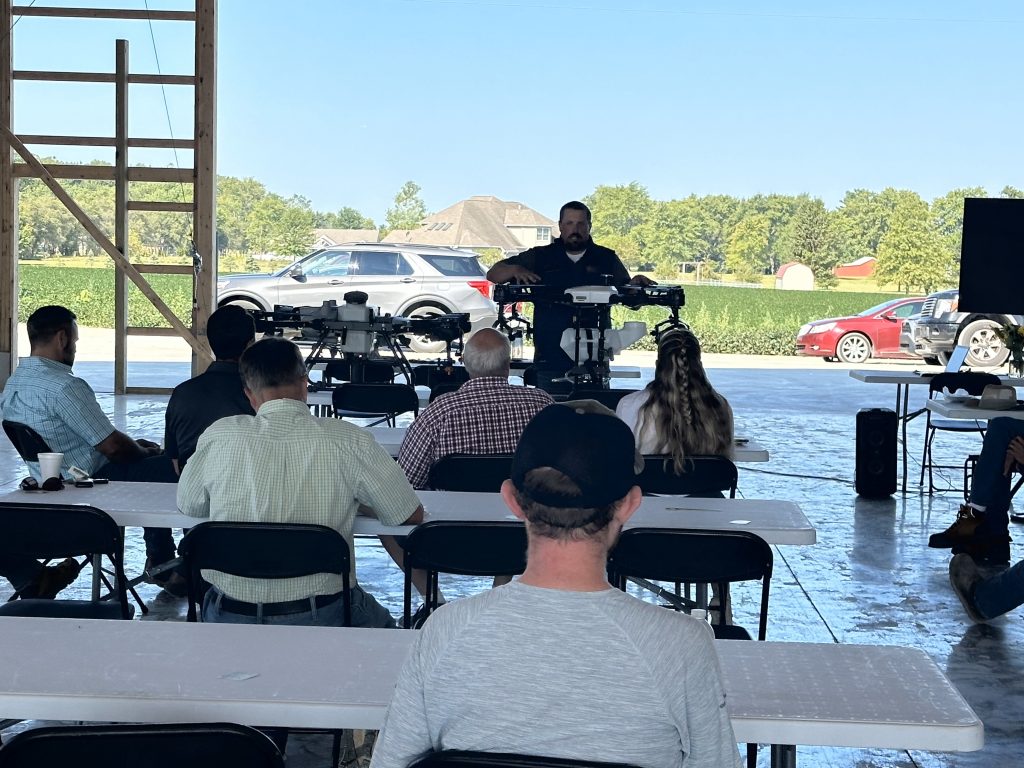
On Aug. 13, farmers and industry representatives gathered for the Upper White Cover Crop Program Field Day on Joe Hamilton’s farm near Muncie, Indiana, to share their results and compare findings.

The day started with insightful presentations on the program’s offerings, including free seed and aerial seeding options for up to 40 acres. It also included a deep dive into the baseline soil sampling and biomass data collected over the years, highlighting the program’s commitment to soil health and sustainable farming practices. 
Joe Hamilton shared his experiences with cover crops in a no-till system, showcasing his planter and discussing his challenges and successes. Guest speaker, AJ Adkins of NTM Ag/Dawn Equipment, explained how to adjust and modify equipment to optimize performance in various cropping scenarios.

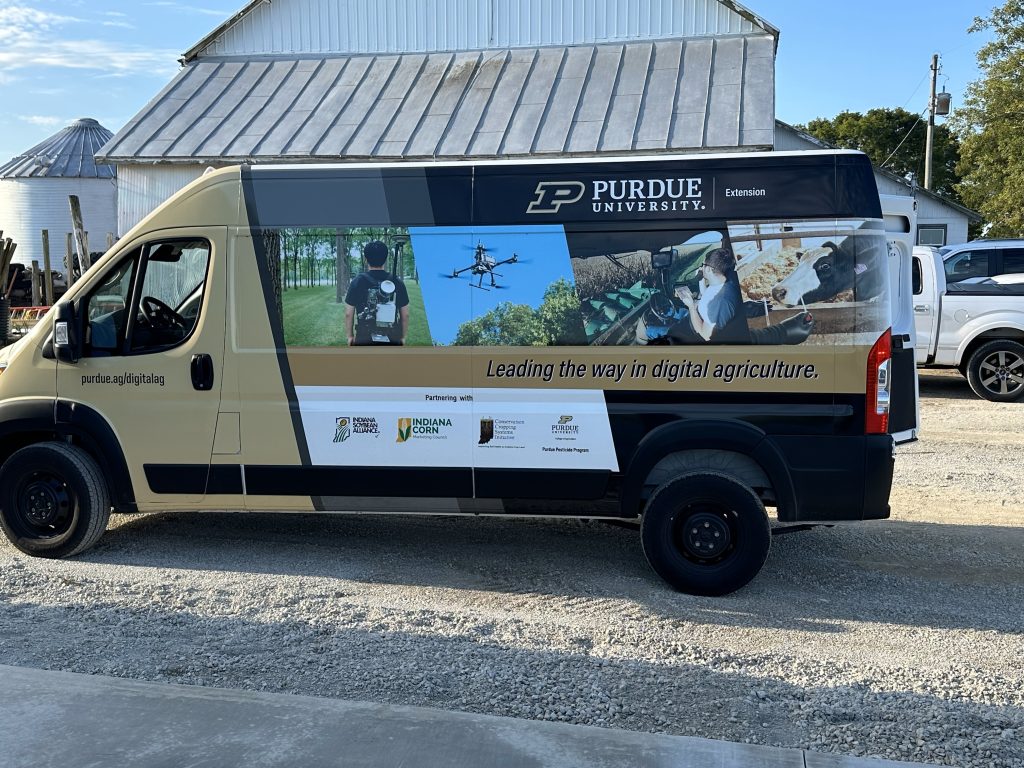
ISA is a proud sponsor of the Digital Ag Van, which was present at the field day. Attendees were given a demonstration of the spray drones. After a successful pilot last year, they continue to use these drones for their efficiency and precision in farming.
Farmers were informed of some statistics on cover crops for contexts: In 2023, Indiana ranked second in the nation for cover crop acres planted into corn and soybeans. According to a 2023 Conservation Survey conducted by the Indiana State Department of Agriculture and Indiana Conservation Partnership, 596,000 acres of cover crops were planted on corn acres, which is up 153 percent from 2017. Additionally, 931,000 acres of cover crops were planted on soybean acres, an increase of 245 percent from 2017. 

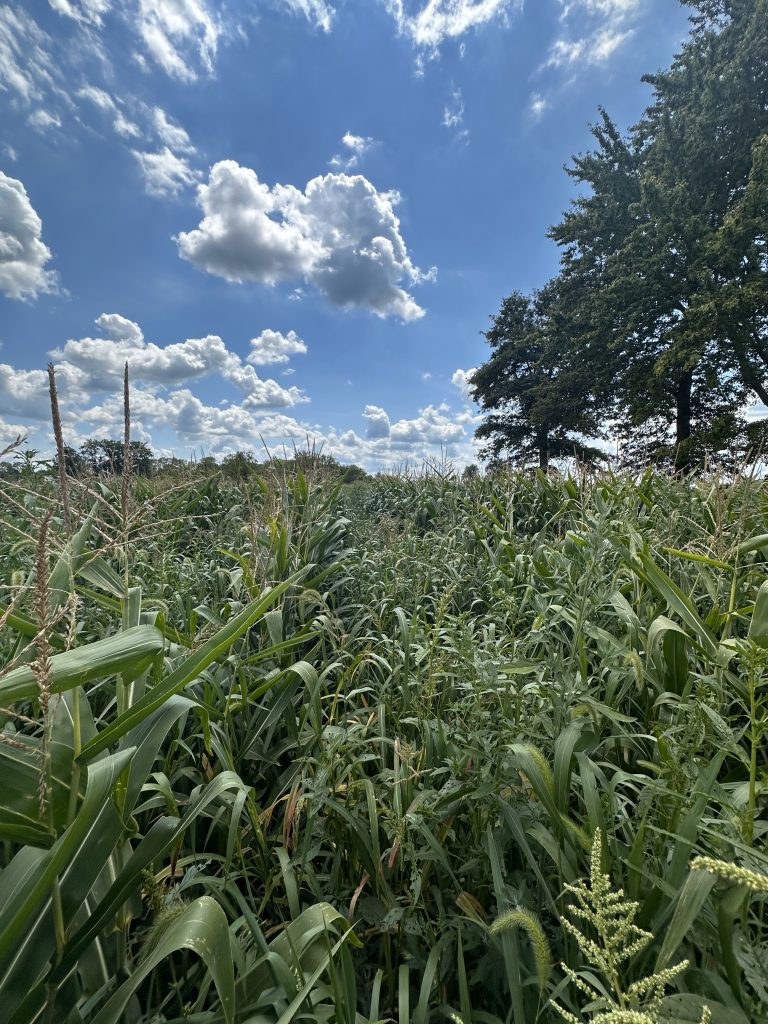
Joe also showcased an innovative approach to corn cultivation on his farm. He has dedicated several acres to growing corn with an unconventional 60-inch row spacing. Joe has implemented a clever dual-purpose strategy in the expansive areas between these corn rows. He’s planted cover crops, which serve not only to protect and enrich the soil but also provide a nutritious food source for his herd of beef cattle. This integrated system demonstrates Joe’s commitment to maximizing land use efficiency while supporting his crop production and livestock operations.

The event was an excellent opportunity for farmers to learn from each other and experts in the field, reinforcing the importance of cover crops in sustainable agriculture. The success of this field day promises more valuable learning opportunities in the future.

Posted: September 18, 2024

Category: ICMC, Indiana Corn and Soybean Post - September 2024, ISA, Sustainability

RELATED

ARTICLES

ICMC

U.S. corn and ethanol boast record exports in marketing year 2024/25 

By Emma Dostal  The U.S. Grains and BioProducts Council (USGBC) organized the final global agricultural trade system (GATS) data from USDA for the 2024/2025 marketing year (MY) to show overall exports of U.S. grains in all forms (GIAF).   Overall, U.S. GIAF exports for MY 24/25 totaled roughly 120.9 million metric tons (MMT), an 11.5 percent increase from the previous year. Mexico, Japan and Colombia were the largest GIAF markets.  Corn exports increased by 26.8 percent in MY 24/25 with a total of 72.5 MMT sold and valued at almost $16.4 billion. This was an increase of 13.3 MMT and a value increase of $3.3 billion compared to the previous marketing year. Mexico, Japan and Colombia were the top three U.S. corn importers.  Mexico experienced its best year on record for U.S. corn exports, purchasing more than 25.5 MMT (1 billion bushels), making it the largest market for U.S. corn. Mexican corn purchases equated to 35 percent of all U.S. corn exported in MY 24/25 valued at about $5.75 billion.  Japan was the second largest market for U.S. corn, purchasing 13.3 MMT (524 million bushels) in 24/25, worth more than $3 billion.  U.S. corn exports to Colombia increased by 22 percent from MY 23/24 to MY 24/25. The South American country purchased 7.6 MMT (300 million bushels) valued at more than $1.7 billion.  U.S. ethanol exports set a record with 2.1 billion gallons exported valued at $4.6 billion. This was an increase of 23.3 percent, a volume increase of 402.4 million gallons and a value increase of $525.6 million from the previous marketing year.  Canada remained the top market for U.S. ethanol, purchasing more than 35.5 percent of all U.S. ethanol exports. This marketing year, U.S. ethanol exports to Canada increased by 16.8 percent to more than 757 million gallons. Exports to Canada were valued at more than $1.6 billion.  The European Union (EU) and United Kingdom (U.K.) were the second and third largest markets for U.S. ethanol respectively. The EU increased the amount of U.S. ethanol purchased by 132 percent from MY 23/24 to MY 24/25, ringing in at 317.5 million gallons.  A total of 11.7 MMT of DDGS was sold and valued at $2.8 billion. Mexico, South Korea and Vietnam were the three largest markets for U.S. DDGS. Mexico represents 20 percent of all U.S. DDGS exports.  The Council will continue working around the world to promote the quality, reliability and value of U.S. coarse grain products, co-products and ethanol.  To help support the growth in global exports for U.S. corn, in MY 25/26, Indiana Corn Marketing Council selected seven USGBC programs to support including scaling of E10 adoption nationwide in Vietnam; upgrading Moroccan poultry distribution systems; developing the Korean ethanol programming roadmap; helping undertake bioethanol promotion at the Seoul Mobility Show; supporting Latin American aquaculture programming; increasing exports of U.S. ethanol and corn to Colombia and backing ethanol insights programming in Latin America.  This support makes it possible for USGBC to continue its mission of developing markets, enabling trade and improving lives for U.S. corn, ethanol and DDGS markets. ...

INDIANA SOYBEAN ALLIANCE

INDIANA CORN MARKETING COUNCIL

INDIANA CORN GROWERS ASSOCIATION

Powered By TracTru