Future ag leaders learn finer points about global markets
By Lilly Pryor
Did you know that 40 percent of the soybeans produced in United States are used domestically, and the remaining 60 percent of the soybeans are exported through Atlantic and Gulf ports?
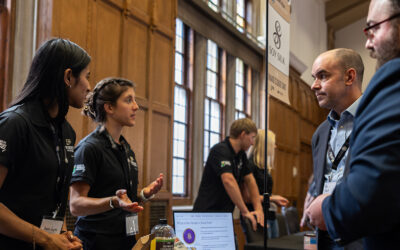
This makes success in the global market essential for Indiana soybean farmers. In June, I had the opportunity, along with fellow intern Kyra Meister, to attend the U.S. Soybean Export Council (USSEC) Intern Retreat. This experience gave me a deeper understanding of how international markets influence our work in Indiana.
Our first stop in St. Louis was the Melvin Price Locks and Dam, where I learned about the 43 locks and dams that run from Lake Ithaca all the way down to Louisiana. These structures are the only reason we can move grain down the river. It amazed me to learn that it can take more than seven days to move grain from St. Louis to Louisiana depending on the load.
Standing atop the lock, I watched a barge work through the system. Seeing the infrastructure in action gave me valuable perspective on how essential river transportation is to agriculture.
That afternoon, I toured the Bayer Research Center in Chesterfield, Mo. I learned about the history and future of plant breeding, as well as how they chip seeds for genetic testing. The tour allowed me to see the innovation constantly taking place in the greenhouses and the machine shop.
The highlight for me was the growth chambers. Walking through the facility, I was surrounded by hundreds of growth chambers, each simulating a different environment to test crop performance. It truly felt like a glimpse into the future of agriculture.
During our time in St. Louis, we had the chance to visit the USSEC headquarters. There, we met USSEC CEO Jim Sutter and United Soybean Board CEO Lucas Lentsch. Hearing about the journeys they took to get where they are today and the passion exuding from them about agriculture was inspiring.
During this meeting time they shared insights into global trends and how international demand for U.S. soybeans is rising. The demand for soy protein is driving growth in ways I hadn’t understood before these conversations.
The next day, we visited ADM, where I was able to see how they receive grain via trains and trucks that are then transported onto barges. The facility had 900 million bushels of storage available at the facility.
Since they sit on the river in a competitive market, they consistently purchase grain “over basis” to ensure that the pile keeps moving. I found this interesting as many markets in Indiana do not reflect the same trend.
To wrap up the trip, I enjoyed getting to participate in the must-see St. Louis experiences. We visited the Gateway Arch and a riverboat cruise along the Mississippi River. It was the perfect way to take in the significance of the river system I had just learned about.
This retreat allowed me to gain a deeper understanding of how and why international markets matter to Indiana farmers. This trip showed me many of the reasons why the Indiana soybean checkoff continues to invest in promoting U.S. soybeans abroad, to return the investment to Indiana farmers. I am incredibly grateful for the experience and excited to carry what I learned into my future in agriculture.
Posted: July 19, 2025
Category: Indiana Corn and Soybean Post - January 2025, Indiana Corn and Soybean Post - July 2025, ISA, News, USSEC